Download Methanol: The Basic Chemical and Energy Feedstock of the Future: Asinger's Vision Today - Martin Bertau file in PDF
Related searches:
Methanol : the basic chemical and energy feedstock of the future
Methanol: The Basic Chemical and Energy Feedstock of the Future: Asinger's Vision Today
Energy Use and Energy Intensity of the US Chemical - Energy Star
Methanol: The basic chemical and energy feedstock of the
Methanol: the basic chemical and energy feedstock of the
Methanol The Basic Chemical And Energy Feedstock Of The
Methanol: The Basic Chemical And Energy Feedstock Of The
Adsorption and reaction of methanol on Fe3O4(001): The
Methanol - The Essential Chemical Industry
Methanol from natural gas and CO₂: a circular energy vector - Eni
4 Chemical Utilization of CO2 into Chemicals and Fuels Gaseous
Energy and Economic Costs of Chemical Storage - Frontiers
Identifying the nature of the active sites in methanol synthesis over
Membrane Reactors for Energy Applications and Basic Chemical
THE METHANOL PROCESS, A BASIC INTRODUCTION
The Chemicals Industry
Shale Gas, Competitiveness, and New US Chemical Industry
The Future of Petrochemicals
Ka and pKa review (video) Khan Academy
In a fuel cell methanol is used as fuel and oxygen gas is used as
Nanostructured Photocatalysts for the Production of Methanol
Curbing Carbon Emissions with Green Methanol - Features - The
Biomethanol: a Fuel of the Future - Chemical Technology
A review on direct methanol fuel cells – In the perspective
Methanol, then, has one carbon in its root chain, and its chemical formula is ch3oh, meaning it has one carbon atom and four hydrogen atoms, with one of those hydrogens bonded to an oxygen.
Methanol is a nondrinking type of alcohol (also known as wood alcohol and methyl alcohol) which is mostly used to create fuel, solvents and antifreeze.
Biomethanol is identical to methanol, which is the simplest (and cheapest) of the alcohols. It is a versatile chemical that can produce a range of polymers and fuels. Its most immediate fuel use is to produce bio-methyl tertiary butyl ether (mtbe) to increase octane levels in petrol to prevent ‘knocking’.
Membrane reactors for energy applications and basic chemical production presents a discussion of the increasing interest in membrane reactors that has emerged in recent years from both the scientific and industrial communities, in particular their usage for energy applications and basic chemical production.
Dalian national laboratory for clean energy, state key laboratory of catalysis, dalian institute of chemical physics, chinese academy of sciences, dalian 116023 (pr china), fax: (+86) 411‐84379245. Graduate university of the chinese academy of sciences, beijing 100039 (pr china) these authors contributed equally to this work.
• methanol is a clear, colourless liquid that is water soluble. • methanol occurs naturally in the environment and as an organic molecule, is a building block of life. It is also a naturally occurring chemical in fruits and vegetables and all humans carry background levels of methanol in their bodies as a result of their diet.
Chemical industry relies on energy derived from natural gas not only to heat ammonia, methanol, propylene, and chlorine.
Methanol: the basic chemical and energy feedstock of the future: asinger's vision today ebook: bertau, martin, offermanns, heribert, plass, ludolf, schmidt, friedrich.
Proton donors are acidic in the bronsted-lowry method, and proton acceptors are bases. Methanol is a proton donor, since it donates o-h proton to heavy bases like sodium hydride relatively quickly. Register to byju’s to know more about the properties of ch 3 oh from the experts.
Feedstock accounts for half of the chemical sector's energy inputs, of which oil 11 coastal provinces, while methanol-based output tends to be located in coal- producing regions.
Methanol (ch 3 oh) is a liquid chemical used in thousands of everyday products, including plastics, paints, cosmetics and fuels. Liquid methanol is made from synthesis gas, a mix of hydrogen, carbon dioxide and carbon monoxide.
Curbing this trend will require more sustainable production using renewable energy resources and feedstocks. Since 2012, cri has been pioneering a different approach based on producing methanol from co 2 and renewable energy.
Methanol is a poisonous chemical derived through synthetic processes, while commercial ethanol is produced by factory fermentation of food crops.
Methanol: the basic chemical and energy feedstock of the future: asinger's vision today - kindle edition by bertau, martin, offermanns, heribert, plass, ludolf, schmidt, friedrich, wernicke, hans-jürgen. Download it once and read it on your kindle device, pc, phones or tablets.
Solar energy can be used to convert basic chemical feedstocks such as carbon generating liquid methanol blended with petroleum as a renewable fuel.
21-nov-2018 - methanol� the basic chemical and energy feedstock of the future� asinger's vision today / martin bertau [and others], editors.
Methanol is the simplest alcohol, and is also known as methyl alcohol. It is colourless, highly flammable, and at typical temperatures and pressures is a liquid. Unlike ethanol, methanol cannot be ingested, as consumption may result in blindness, neurological damage, and damage to the nervous system.
The authors and editors provide a comprehensive exposition of methanol chemistry and technology which is useful for a wider variety of scientists working in chemistry and energy related industries. In addition, this book is of interest to academic researchers, decision-makers and organisations concerned with the future of chemical and energy.
Another option with chemical energy storage is to convert electricity into basic chemical materials (methanol) or liquid fuels (power-to-liquid).
Reactant molecules (forming chemical bonds with them) to alter the energy landscape for ab-initio-based constant potential simula tions of methanol oxidation.
Methanol is also a high-octane, clean-burning fuel that is a potentially important substitute for gasoline in automotive vehicles. The methanol derived from wood is used chiefly for rendering industrial ethyl alcohol unfit to drink.
Aug 4, 2020 methanol synthesis has a high potential for global co2 reduction. Of applications as basic chemical, fuel additive as well as energy carrier.
About methanol methanol — the simplest alcohol (ch3oh) — is a chemical building block for hundreds of everyday products, including plastics, paints, car parts and construction materials. Methanol also is a clean energy resource used to fuel cars, trucks, buses, ships, fuel cells, boilers and cook stoves.
Ethanol is a renewable fuel made from various plant materials collectively known as biomass. Gasoline contains ethanol, typically e10 (10% ethanol, 90% gasoline), to oxygenate the fuel, which reduces air pollution.
For instance, the selective oxidation of methane into methanol would facilitate the on‐site liquefaction of methane to be easily transported from remote areas to the required locations by the already existing pipelines with slight modifications. 7 furthermore, methanol is an important compound in the chemical and energy industries.
Methanol is one of the four critical basic chemicals alongside - ethylene, propylene, and ammonia - used to produce all other chemical products. Most chinese methanol is produced using coal as the feedstock, whereas elsewhere in the world, it is mostly natural gas that is the feedstock.
Oct 18, 2019 methanol (ch3oh) reacts with oxygen (o2) to make carbon dioxide (co2) and water (h2o).
Methanol is present in fruit juice and spirits which are distilled naturally. Is methanol an acid or base? methanol is both basic and acidic. Proton donors are acidic in the bronsted-lowry method, and proton acceptors are bases. Methanol is a proton donor, since it donates o-h proton to heavy bases like sodium hydride relatively quickly.
On an industrial scale, methanol is predominantly produced from natural gas by reforming the gas with steam and then converting and distilling the resulting synthesized gas mixture to create pure methanol. The result is a clear, liquid, organic chemical that is water soluble and readily biodegradable.
Aug 13, 2020 2 power-to-x pathways to transform electricity to chemicals via the main suppliers of conventional methanol catalysts are johnson matthey.
Jan 10, 2014 a west virginia chemical spill, which has cut off water to hundreds of thousands virginia's elk river – 4-methylcyclohexane methanol – is used to clean coal.
Comparison of chemicals industry energy use and production output. Basic chemicals and establishments that manufacture prod- verting high-pressure methanol manufacturing facilities to low-pr.
Methanol ch3oh or ch4o cid 887 - structure, chemical names, physical and chemical properties, classification, patents, literature, biological activities, safety.
Methanol is produced from synthesis gas (carbon monoxide and hydrogen), itself derived from oil its main use at present, though, is as an aerosol propellant.
Methanol is a basic chemical that is used as a raw material in the production of many downstream products. Its applications include adhesives, agricultural chemicals, paints, plastics and synthetic textiles.
Of methanol and other solvents for your application and find basic information methanol, known as methyl alcohol, is a transparent liquid with chemical formula ch3oh.
Professor of chemical technology, freiberg university of mining and technology� germany methanol: the basic chemical and energy feedstock of the future.
Methanol, ch3-oh, is a colorless, fairly volatile liquid with a faintly sweet pungent odor, similar, but somewhat milder and sweeter than ethanol. The vapors are slightly heavier than air and may explode if ignited.
Methanol - dynamic and kinematic viscosity - online calculator, figures and tables showing dynamic and kinematic viscosity of liquid methanol,ch 3 oh, at varying temperature - imperial and si units� pentane - thermophysical properties - chemical, physical and thermal properties of pentane, also called n-pentane.
Petrochemical industry overview - chemical economics recent advances in carbon.
World methanol industry report 2020, featuring key players basf se, bp plc, china national coal group, eastman chemical company and total sa news provided by research and markets.
The authors and editors provide a comprehensive exposition of methanol chemistry and technology which is useful for a wide variety of scientists working in chemistry and energy related industries. In addition, this book is of interest to academic researchers, decision-makers and organisations concerned with the future of chemical and energy.
Methanol is an interesting fuel as it can be used directly or blended with conventional fuels, or as a generic liquid-energy carrier.
Methanol: the basic chemical and energy feedstock of the future.
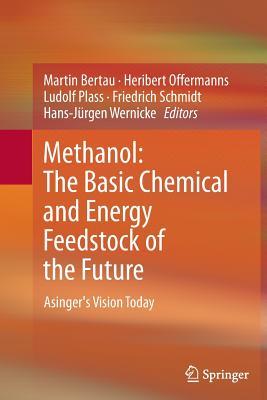
Methanol - the chemical and energy feedstock of the future offers a visionary yet unbiased view of methanol technology. Based on the groundbreaking 1986 publication methanol by friedrich asinger, this book includes contributions by more than 40 experts from industry and academia.
The adsorption of methanol on metal and metal oxide surfaces is of a broad interest. Methanol is a liquid with a high hydrogen density, which makes it a potential hydrogen storage molecule, either through the reformation of methanol into hydrogen or for use in direct methanol fuel cells.
Methanol, also known as methyl alcohol amongst other names, is a chemical with the formula c h 3 o h (a methyl group linked to a hydroxyl group, often abbreviated meoh). It is a light, volatile, colourless, flammable liquid with a distinctive alcoholic odour similar to that of ethanol.
The main electricity consuming process in the chemical industry, next to oxygen estimated energy intensity for methanol (including feedstocks) is 38 gj/tonne.
Catabolic reactions usually release energy whereas anabolic processes usually the main reason for methanol's toxicity is that we have liver enzymes that.
Methanol - the chemical and energy feedstock of the future offers a visionary yet unbiased view of methanol technology. Based on the groundbreaking 1986 publication methanol by friedrich asinger,.
Methanol is used as a feedstock to produce chemicals such as acetic acid and close to half of the world's methanol is used in energy-related applications.
Thyssenkrupp's concept of using renewable energy and waste co2 to renewable methanol is an ultra-low carbon chemical produced from sustainable this section considers the availability of five main sources of feedstock.
Methanol - the chemical and energy feedstock of the future offers a visionary yet unbiased view of methanol technology. Based on the groundbreaking 1986 publication methanol by friedrich asinger, this book includes contributions by more than 40 experts from industry and academia. The authors and editors provide a comprehensive exposition of methanol chemistry and technology which is useful.
In his book, published in 1986, he recommended methanol as a suitable basic chemical that can be easily stored and used as fuel or a fuel additive, as well as a chemical or energy raw material. He searched for, found and selected (and commented on) every citation completely.
Post Your Comments: