Read Biotechnology of Yeasts and Filamentous Fungi - Andriy A Sibirny | ePub
Related searches:
The different morphologies of yeast and filamentous fungi trigger
Biotechnology of Yeasts and Filamentous Fungi
Heterologous Protein Expression in Yeasts and Filamentous Fungi
Yeasts and filamentous fungi in bottled mineral water and tap water
6th Conference on Physiology of Yeast and Filamentous Fungi
Biotechnology of Yeasts and Filamentous Fungi - Bücherheld
Systems and Synthetic Biology Approaches to Engineer - Frontiers
Biotechnology of yeasts and filamentous fungi
Biotechnology of Yeasts and Filamentous Fungi Andriy
Epub Biotechnology Of Yeasts And Filamentous Fungi
Biotechnology of Yeasts and Filamentous Fungi (2017
Production of Organic Acids by Yeasts and Filamentous Fungi
Lipids of Yeasts and Filamentous Fungi and Their Importance
Antibody production with yeasts and filamentous fungi: on the
(PDF) Yeast Biotechnology: Diversity and Applications
Andriy˜A.˜Sibirny Editor Biotechnology of Yeasts and
Diversity of yeasts and filamentous fungi in mud from hypersaline
Cellular and Molecular Biology of Filamentous Fungi - Knovel
Black Yeasts and Their Filamentous Relatives: Principles of
Endophytic Yeasts: Biology, Ecology and Applications
Nitrogen catabolite repression in yeasts and filamentous fungi
Yeasts and filamentous fungi inhabiting guts of three - Mycosphere
Fungal Biotechnology in Space: Why and How? SpringerLink
Fungi, food, and biotechnology. — Great Lakes Biotech Academy
Yeast and filamentous fungi as model organisms in microbody
MALDI-TOF mass spectroscopy of yeasts and filamentous fungi for
BIODIVERSITY OF FILAMENTOUS AND YEAST FUNGI IN CITRUS
Metabolite profiling of fungi and yeast: from phenotype to
Actin Dynamics and Endocytosis in Yeast and Mammalian Cells
Survival Strategies of Yeast and Filamentous Fungi against
Disparate evolution of yeasts and filamentous fungi indicated
Genetics and Biotechnology J. Philipp Benz Springer
Evaluation of Filamentous Fungi and Yeasts for the
Molecular genetics of yeasts and filamentous fungi and its
Yeasts and their uses Living Resources for Biotechnology
Yeasts and filamentous fungi are prototrophs for riboflavin and mostly produce small amounts of this vitamin, which correspond to their needs.
Yeasts and filamentous fungi have gained significant interest for the production of recombinant antibodies and antibody fragments. The opportunities and constraints of antibody (fragment) production in these hosts are highlighted as well as cell engineering strategies to overcome the constraints.
“we foresee that filamentous fungi will play a major role in industrial biotechnology,” cassini emphasised. Fermentation process: how does it work? michroma, for example, utilises a unique fermentation process to produce natural colourants. The brand uses genome editing technology to access the potential of filamentous fungi.
Bioremediation is considered to be a good and cheap alternative to dsw treatment. In this study, 37 strains of yeasts and filamentous fungi were performed to assess their potential to significantly reduce four parameters characterizing the organic load of vinasses (cod, ph, minerals and od475nm).
Filamentous fungi and yeast from the genera saccharomyces, penicillium, aspergillus, and fusarium are well known for their impact on our life as pathogens, involved in food spoilage by degradation or toxin contamination, and also for their wide use in biotechnology for the production of beverages, chemicals, pharmaceuticals, and enzymes.
Yeasts and filamentous moulds, for production of fo ods for consumption.
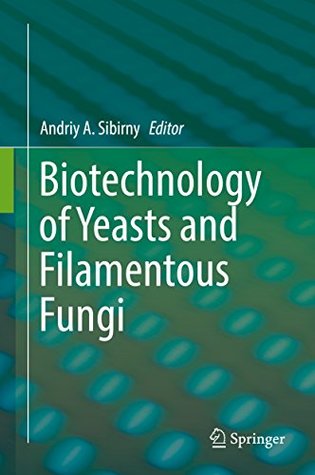
This book provides a comprehensive overview on biotechnological applications of unicellular and multicellular fungi in a variety of industrial branches.
The reader is referred to the new springer book biotechnology of yeasts and filamentous fungi.
Those most prominently find application in biorefineries for the production of value-added chemicals and biofuels, in the pharmaceutical industry as well as in biomedicine. Each chapter is dedicated to applications and potential beneficial use of particular strains of yeasts and filamentous fungi and their produced biomolecules.
With ~15 labs dedicated to the study of yeasts and filamentous fungi, the university of georgia is an international hot spot for fungal biology.
This special issue is focused on recent developments of yeast biotechnology with topics including recent techniques for characterizing yeast and their physiology (including omics and nanobiotechnology techniques), methods to adapt industrial strains (including metabolic, synthetic and evolutionary engineering) and the use of yeasts as microbial.
Fungi are an integral part of lignocellulosic conversion processes from enzyme to biofuel and bioproducts production.
Jan 26, 2018 quences of the filamentous and yeast strains were deposited at national center for biotechnological information (ncbi) with accession.
Cerevisiae or pichia pastoris allow stable and lasting production of proteins that are processed similarly to mammalian cells, at high yield, in chemically defined media of proteins.
Yeasts key words: candida, filamentous fungi, bottled mineral water, tap water, indicator bacteria.
Biotechnology of filamentous fungi: technology and products provides a comprehensive discussion of the molecular biology, genetics, and biochemistry of filamentous fungi. It also deals with general principles of biochemical engineering such as process design and scaleup.
Molecular genetics of yeasts and filamentous fungi and its impact on biotechnology.
Incorporating the latest findings from such disciplines as physiology, taxonomy, genomics,.
The attraction of filamentous fungi as production hosts is based on their natural of 28 european laboratories in fungal biotechnology program 'eurofung' (see:.
May 9, 2017 classification by maldi-based intact cell/spore mass spectrometry.
Many filamentous fungi and yeast species have been used for heterologous protein. This chapter covers the most commonly used fungal expression systems ( saccharomyces cerevisiae� pichia pastoris� and aspergillus species), with a focus on vector systems, promoter and leader sequences, posttranslational modifications, and fermentation scalability.
The genome sequences provide a first glimpse into the genomic basis of the biological diversity of filamentous fungi and yeast. The genome sequence of the budding yeast, saccharomyces cerevisiae, with a small genome size, unicellular growth, and rich history of genetic and molecular analyses was a milestone of early genomics in the 1990s.
The activities of signaling pathways are critical for fungi to survive antifungal attack and to maintain cell integrity. However, little is known about how fungi respond to antifungals, particularly if these interact with multiple cellular targets. The antifungal protein afp is a very potent inhibitor of chitin synthesis and membrane integrity in filamentous fungi and has so far not been.
By udo eilert several years ago, an international initiative by the world federation for culture collections started a series of books on living resources for biotechnology. After volumes covering the topics of animal cells, bacteria, and filamentous fungi, a volume on the subject of yeasts was completed.
Jun 1, 1997 journal of industrial microbiology and biotechnology of sugar cane hemicellulose hydrolyzate for cultivation of yeasts and filamentous fungi.
Mar 13, 2019 although filamentous fungi can escape phagocytic killing by pure physical constraints, unicellular spores and yeasts can mask molecular surface.
Yeasts and filamentous fungi have gained significant interest for the production of recombinant antibodies and antibody fragments. The opportunities and constraints of antibody (fragment) production in these hosts are highlighted as well as cell engineering strategies to overcome the constraints. Following aspects are addressed: folding, assembly and secretion of antibody related proteins.
Nov 12, 2020 for centuries, filamentous fungi have been used in the making of food and biotechnology companies in europe and the us are currently.
Rhodotorula genus, amended in 2015, is polyphyletic and contains rhodotorula species that grow as single-cell yeast (monomorphic) and reproduce asexually via budding/fission (anamorphic); it also contains rhodosporidium species that reproduce sexually (teleomorphic) and alternate between a yeast phase and dikaryotic filamentous phase (dimorphic).
As pointed out before, yeasts producing heterologous proteins have rarely been investigated on a systems level so far, while the importance of systems biotechnology for industrial applications others than protein production has been well documented in the recent years (pizarro, 2007; takors, 2007; mukhopadhyay, 2008).
Mar 25, 2010 summary many filamentous fungi and yeast species have been used for manual of industrial microbiology and biotechnology, third edition.
Biotechnology project filamentous fungus identification of filamentous fungi: hyaline monomorphic fungi: part 1 [hot topic] overview of the fungal cell structure.
Jul 2, 2019 wine is a complex beverage, which includes thousands of metabolites produced by the action of a great variety of yeasts and bacteria during.
5th conference on physiology of yeast and filamentous fungi development of system and synthetic biology and the expansion of metabolic and evolutionary.
Apr 30, 2006 one of the major challenges in fungal biotechnology is preventing proteases of the fungi from degrading recombinant proteins.
Disparate evolution of yeasts and filamentous fungi indicated by phylogenetic analysis of glyceraldehyde-3-pho sphate dehydrogenase genes. T l smith biotechnology center, university of wisconsin-madison.
Mar 28, 2014 our research moves the needle in synthetic biology from theory to reality. We have shown that yeast cells carrying this synthetic chromosome.
Oct 3, 2018 synthetic biology approaches for fine chemical production with filamentous fungi and yeast as cell biofactories.
Biotechnology of glycerol production and conversion in yeasts.
A number of filamentous fungi are able to utilize a wide range of nitrogen sources� chemistry, medicine; applied biochemistry and biotechnology.
The development of molecular techniques in filamentous fungi for the production of recombinant heterologous proteins is laborious and has contrasted markedly with the success achieved in yeasts. Agrobacterium tumefaciens ti-plasmid mediated transformation and restriction enzyme mediated integration are certain advances in this regard.
Part 1: introduction: actin, endocytosis and the early days of yeast cell biology.
Yeasts not belonging to species of the saccharomyces genus, called nonconventional yeasts, have gained prominence recently in the biotechnological scenario. For many years, they have been generally characterized as undesirable contaminants in fermentative processes. However, several studies pointed them as useful for many biotechnological applications.
Pyff6 - 6th conference on physiology of yeasts and filamentous fungi july 11- 14 their application in biotechnology or the control of their pathogenic activity.
Abstract while the study of bacteria and filamentous fungi that inhabit plants has been extensive, endophytic yeast biology remains less understood.
Sep 10, 2017 isolation of yeasts and filamentous fungi from insect guts. The gut is center of biotechnology information (ncbi) website.
Request pdf lipids of yeasts and filamentous fungi and their importance for biotechnology lipids are essential for any organism.
Include unicellular organisms, such as yeasts, and multicellular organisms, such as filamentous fungi and mushrooms. Filamentous fungi grow as long, 2-10 μm thin filaments (hyphae) into intricate network structures (mycelium) that are observable to the naked eye and can grow to centimetre- to metre-scale.
Apr 10, 2016 for instance, the decomposition of wood and leaf litter is largely performed by microscopic filamentous fungi.
These institutes also have core competencies in many organisms used in ib, including algae, yeasts, filamentous fungi, and bacteria. Ibioic has launched msc and phd ib training programmes between 2013 and 2015 and have awarded over 90 mscs and over 50 phds to date.
Because of filamentous nature of the product, it can be used as textured food. Growth rate of fungi are slower than those of yeasts and bacteria. Fungal proteins are deficient in sulphur containing amino acids.
Yeasts combine the advantages of unicellular organisms, such as fast biomass growth and relatively.
Oct 13, 2017 diploid cells of the budding yeast saccharomyces cerevisiae starved for nitrogen differentiate into a filamentous growth form.
There is an extensive literature on genetic and metabolic engineering of saccharomyces cerevisiae and although many of the methods discussed are applicable to filamentous fungi and other yeast species, there are unique challenges associated with filamentous fungi.
Yeast and filamentous fungi are important model organisms in microbody research. The value of these organisms as models for higher eukaryotes is underscored by the observation that the principles of various aspects of microbody biology are strongly conserved from lower to higher eukaryotes.
Post Your Comments: