Download Problem Solving: Perspectives from Cognition and Neuroscience - S. Ian Robertson file in ePub
Related searches:
Problem Solving: Perspectives from Cognition and Neuroscience
Problem solving: Perspectives from cognition and neuroscience
Problem solving: perspectives from cognition and neuroscience
(PDF) Problem-Solving from Polya to Nowadays: A Review and
Problem Solving. Perspectives from Cognition and Neuroscience
Perspectives on problem solving and instruction - ScienceDirect
The Coaching Group Seeking Different Perspectives and Solving
Nonlinear dynamics and neo-piagetian theories in problem solving
Problem solving from different perspectives: An investigation of
Perspectives on problem solving and instruction Semantic Scholar
The Vertical Pizza: X, Y and Z Axis Problem Solving Perspectives
Problem Solving and Decision Making:
Problem-Solving Strategies and Obstacles
8 Common Problem Solving Interview Questions and Answers
Mental Models: Solve Problems by Approaching Them from New
Critical Thinking and Problem Solving Core Outcomes at PCC
Goals, Strategies, and Well-Being Across Adulthood: Integrating
Psychology: Perspectives and Connections Chapter 10 - Quizlet
Perspectives on problem solving and instruction - Learning
From Novice to Expert: Problem Solving in ICD - Perspectives
Cultural and Tactical Perspectives on Problem Solving
Theories, models and perspectives - Cheat sheet for field
Lesson Problem Solving and Critical Thinking
And funke, joachim (2013) perspectives on problem solving in educational assessment: analytical,.
Problem-solving strategies� there are a number of different ways that people go about solving a problem. Some of these strategies might be used on their own, but people may also employ a range of approaches to figuring out and fixing a problem.
Read detailed description of unlocking the power of perspectives: problem solving with clarity, creativity, and collaboration by sloan with reviews, dates,.
Problem-solving (ps) is a principal component of mathematics education. In this chapter we shall examine the role of ps for learning mathematics, we shall state our personal beliefs. And we shall try to investigate the future perspectives for ps in mathematics education.
Research and analyze data relevant to issues from a variety of media.
The first phase of problem-solving requires thought and analysis. Problem identification may sound clear, but it actually can be a difficult task. So you should spend some time to define the problem and know people’s different views on the issue.
Before rushing to solve a problem, always make sure you look at it from different perspectives. Looking at it with different eyes is a great way to have instant insight on new, overlooked directions. For example, if you own a business and are trying to ‘increase sales’, try to view this problem from the point of view of, say, a customer.
Problem solving is centered on your ability to identify critical issues and create or identify solutions. Well-developed problem solving skills is a characteristic of a successful student. Remember, problems are a part of everyday life and your ability to resolve problems will have a positive influence on your future.
Dec 30, 2020 officers might also consider 'audience legitimacy' when forming their opinion of problem-solving.
Regardless of your situation -- whether you have a personal problem to solve, or are in a formal task force charged with problem solving, different perspectives are not only useful, they are essential. Everyone knows about his or her own blind spots, prejudices, automatic habits, hidden (even unconscious) agendas, and group think.
Lesson – problem solving and critical thinking lesson objectives after completing this lesson, participants will be able to: identify the seven steps to solving a problem effectively practice solving work problems as an individual and as a member of a team understand how the same problem solving process works in many settings.
Problem solving and product design experiences can empower students by presenting unique learning opportunities.
Lessons learned from cancer scientists about how to solve large, complex issues. In late november of 1991, a three-year-old girl was diagnosed with leukemia.
When an issue, problem, or annoyance isn’t life or death, we tend to brush it off as a “first world” problem. This suggests the problem isn’t worth solving, and, as school of life explains in this video, that’s counterproductive.
Problem-solving presents a creative solution to a complex housing problem problem-solving is a person-centered, short-term housing intervention that seeks to assist households in maintaining their current housing or identifying an immediate and safe housing alternative within their own social network.
The third section discusses different perspectives on problem solving as a skill. A distinction is made between phase models, which typically see problem solving as an early phase in the development of expertise, and system 1/system 2 models, which view problem solving as an important feature of two interacting systems.
Students answer a series of questions about the causes, consequences and solutions for a problem that arises from the issue.
The right problem-solving strategies can make the difference between putting a challenge behind you and wallowing in an endemic issue. Branford and stein presented the ideal problem-solving method in 1984. This easy-to-remember heuristic device represents the 5 steps of this evergreen problem-solving method.
Diagnose the situation so that your focus is on the problem, not just its symptoms. Helpful problem-solving techniques include using flowcharts to identify the expected steps of a process and cause-and-effect diagrams to define and analyze root causes.
Problem solving the ability to understand and acknowledge a differing viewpoint is an integral component of conflict resolution. In order to be effective problem solvers, students need to be able to see the issue from multiple angles.
The purpose of this paper is to relate a model of the problem-solving process to a theory of personality type.
If you take a look at job ads online, many of them will list “problem-solving skills” as a necessity for the job role. The truth is, every job in the world requires some kind of problem-solving.
The way that we assess and overcome problems is an essential part of every.
Tip: this is a situational problem-solving interview question that helps the employer determine what steps you take during the research phase of the problem-solving process. Though the interviewer may not choose this specific scenario, it's important to be prepared to talk about your research and data gathering processes.
Find unlocking the power of perspectives: problem solving with clarity, creativity, and collaboration (live online) program details such as dates, duration,.
Sep 3, 2012 delete or remove other items on the art board and see what happens.
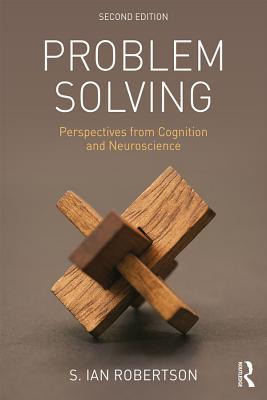
Problem solving provides a clear introduction to the underlying mental processes involved in solving problems. Drawing on research from cognitive psychology and neuroscience, it examines the methods and techniques used by both novices and experts in familiar and unfamiliar situations.
Even if the group also possesses variety in problem-solving tools and cultural perspectives, divergent goals work against the beneficial effect they can have. As he summarizes it: [groups] with diverse cognitive toolboxes and diverse fundamental preferences have higher variance performance (they locate better outcomes and produce more conflict).
Perspective-taking is the neglected secret of constructive problem solving, negotiations, conflict resolution, higher-level cognitive and moral reasoning, and most other aspects of human.
Problem–solving perspectives ryan nielson department of physics why is this a valuable skill? todd lines, who came to our department from the defense industry, identified three things which distinguished a component/standard engineer from a system engineer. A fourth distinguishing feature is income: a system engineer typically earns about $30,000.
Thus, students emerging from schools into the workforce and public life will be expected to have collaborative problem-solving skills and the ability to collaborate.
Data from achievement scores of students in tenth grade physics were analyzed using dynamic difference equations and statistical regression techniques.
Benefits: 319-335-2676 payroll: 319-335-2381 administrative services: 319-335-3558 the uhr welcome center is open 10:00am-4:00pm, monday through friday.
An estimated three out of four people wear some form of corrective lenses, according to the vision impact institute. Even though so many people wear glasses and contacts, corrective lenses can’t treat a variety of vision problems.
Apr 17, 2020 solving problems in many cases requires a significant change of perspective. Drawing inspiration from the x, y and z axes of the cartesian.
Problem solving from different perspectives: an investigation of instructional context on social problem-solving ability.
“participants learn how to navigate problem solving, using a model that encourages them to pause and reflect on situations from multiple perspectives.
The second method is one i use all of the time in solving business problems. When examined as a capacity issue, you may see new ways to make the company more profitable without even fixing the quality right away.
Buzzfeed staff problem solved (by thinking outside of the cube). (not totally clear what the problem is here, but something inno.
Mar 11, 2021 smashing stereotypes, cara croft phd: less diverse perspectives and problem- solving skills slow the pace of research and scientific.
Ian robertson; isbn: 9780756613044; since all our products are electronic, you can download your ebook immediately after.
Within psychology, problem solving refers to a motivational drive for reading a definite “goal” from a present situation or condition that is either not moving toward.
Most educators claim that problem solving is important, but they take very different perspective on it and there is little agreement on how it should be taught.
Can we borrow a metaphor from another discipline? the motto of the imaginative phase is: thinking something different.
It helps you to look at a problem from different perspectives. Use the tool by drawing a simple four-square grid and writing your problem or issue in the middle of the grid. Then, choose four different perspectives that you will use to look at your problem, and brainstorm factors related to your problem from each of those perspectives.
Individual approaches to problem solving can be very different based on what team or role an individual holds, and so it can be easy for existing biases or perspectives to find their way into the problem solving process. It is important to make space for different perspectives when looking and problems and their potential solutions.
As the saying goes, if the only tool you have is a hammer, every problem will look like a nail. The same logic applies when you're approaching more abstract problems.
Post Your Comments: