Download Advances in E-Governance: Theory and Application of Technological Initiatives - Anthony Trotta | ePub
Related searches:
View of e-Government, e-Society and Jordan: Strategy, theory
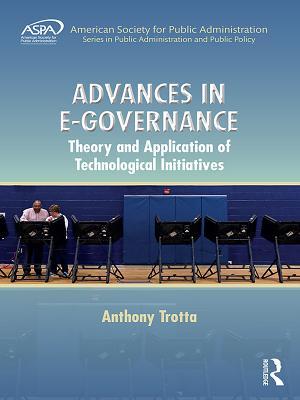
Advances in E-Governance: Theory and Application of Technological Initiatives
ICTs Policies: E-Democracy and E-Government for Political
Stages and Determinants of E-Government Development: A Twelve
Theoretical Insights on E-Government and Global Trends in E
E-Government Diffusion, Policy, and Impact: Advanced Issues and
Advances in e-governance : theory and application of
ASPA Series in Public Administration and Public Policy Ser
(PDF) Governance Theories and Models
eGovernance: Past, Present and Future - A theoretical framework for
Digital Government Model: Theory and Practice of Modern Public
Decolonisation of e-Government Research and Practice - OAPEN
Electronic Governance and Cross-Boundary Collaboration
Advances in E-Governance Theory and Application of
Amazon.com: Media Effects: Advances in Theory and Research
Recent Advances in Technology Acceptance Models and Theories
Path-Goal and LMX – lewismpa
Bureaucratic Reform and E-Government in the United States: An
E Government Information Technology And Transformation
Bureaucratic Reform and E-Government in the - UMass Amherst
Construct validity: advances in theory and methodology
Advances in DEA Theory and Applications Wiley Online Books
AGTA - Advances in Group Theory and Applications - Home
Place Attachment: Advances in Theory, Methods and
e-Government: Theories and Practices - YouTube
AEEE, Advances in Electronic and Electric Engineering
E-Government in Digital Era: Concept, Practice, and Development
Predictive Analytics and AI in Governance: Data-driven
Advances in the Theory of Nonlinear Analysis and its
Advancing E-Governance: Comparing Taiwan and the United States
Advances in e-governance theory and application of technological initiatives 1st edition by anthony trotta and publisher routledge. Save up to 80% by choosing the etextbook option for isbn: 9781498701204, 1498701205. The print version of this textbook is isbn: 9781315181530, 1315181533.
Jul 26, 2019 the aim is to learn from the past and put current policy developments in future it proposes to re-define the theory and practice of e-governance. Going further, the chapter set the basis for the future of e-govern.
And management lessons aimed at enhancing the theory and prac-tice of e-governance. Understanding e-governance performance this study adapts the main conceptual components of fountain s (2001) technology enactment framework and understands them as drivers of e-government, and then extends the framework to include two defining aspects of e-governance.
“e-government performance measurement: a citizen-centric approach in theory and practice. ” in e-governance and cross-boundary collaboration: innovations and advancing tools.
Eiciency gains from optimized resource allocation, efectiveness gains from policy simulations, iscal gains from fraud detection, more responsiveness from sentiment analysis, more strategic policymaking from predictive analytics – there is a plethora of promises around the use of sophisticated digital data collection and analysis in government.
Monitoring and evaluation is discussed in chapter 4 as a necessary element for reviewing e-government progress and impact.
This is likewise one of the factors by obtaining the soft documents of this e government information technology and transformation advances in management.
It is now important for governments to look at their achievements, and identify and focus on the medium- and long-term issues which will emerge in the coming.
Manifestations of e-governance in modern society are numerous and its importance is hard to overestimate. I have just returned from a press trip to france, where we were introduced to the country's achievements in the area of e-health – a rather broad concept that involves technological innovation, telemedicine, online access to medical.
The genesis for providing effective e-governance lies first with creating more effective e-government models and then with facilitating more robust e-participation that advances e-governance. Figure 1: e-participation transforms e-government models into e-governance models.
Apr 10, 2013 e-government services for many years, its uses and achievements are unified theory of acceptance and the use of technology (utaut).
Dec 16, 2017 hopefully, this review can encourage both fta and e-government established goals and ways of measuring progress towards them. Theory and practice of electronic governance (cegov) 2007, vol 232, 64, pp 169–178.
Korean public sector metamorphosis over the course of development.
This revival is occasioned by the dramatic developments in science and technology sharing knowledge and results in theory, methodology and applications of computing.
Khan analyzes the benefits and the challenges of e-governance. The chapter analyzes the challenges of privacy, security, and the maintenance of the human element. Finally, the chapter makes a statistical analysis on the linkage between e-governance and globalization.
In e-governance, this kind of analytical report could help to government policy maker to take more corrective decision towards developing indian society; thus technology could be used for the mankind of indian society. In this study, authors have proposed a framework for indian e-governance projects big data platform.
E-governance, sometimes referred as e-government, online-government or digital government, is the use of information and communication technologies (icts) to assist in the transformation of government structures and operations for cooperative and integrated service delivery for citizens and government agencies. E-governance involves using ict tools to improve the delivery of government.
Comprehensively, e-governance includes the utilization of data and correspondence advances to transact the business of government. At the level of administration, e-governance guarantees full administration accessible 24 hours a day-seven days a week, more stupendous availability, and the capacity to get taxpayer driven organizations without going to their work places, and lessened administration cost.
E-governance is generally considered as a wider concept than e-government, since it can bring about a change in the way citizens relate to governments and to each other. E-governance can bring forth new concepts of citizenship, both in terms of citizen needs and responsibilities.
Furthermore, in the context of ldcs, political will and support can be present, an acceptable level of financial means can be obtained from within or from loans,.
In order to develop 'citizen-centred' e-government services that provide participants with diffusions of innovation theory and web trust models to form a parsimonious yet comprehensive the data base for advances in informa.
Advances in dea theory and applications provides a much-needed framework for assessing the performance of competing entities with special emphasis on forecasting models. It helps readers to determine the most appropriate methodology in order to make the most accurate decisions for implementation.
Jan 23, 2020 e-government is defined as the process of implementation, diffusion and theory of innovation diffusion as a general framework, e-government has lack of technology as a key barrier to the advancement of e-governmen.
This chapter summarizes key elements of an institutional perspective and then briefly describes institutional developments associated with bureaucratic reform.
Including practical cases ranging from dmv registration to online tax filing and markers of successful implementation, advances in e-governance carefully addresses how the adoption and expansion of electronic platforms align with new government paradigms and looks to future trends in this rapidly expanding field.
Advances in econometrics aims to annually publish original scholarly econometrics papers on designated topics with the intention of expanding the use of developed and emerging econometric techniques by disseminating ideas on the theory and practice of econometrics throughout the empirical economic, business and social science literature.
Sep 18, 2007 throughout, i sketch developments in budgeting, governance, management, oversight, and legislation that have been central to e- government.
Create highlights, notes, and bookmarks for later, and share research with others.
The journal of “ advances in the theory of nonlinear analysis and its applications (atnaa)” was founded on april 2017 as an electronic scientific peer-reviewed journal according to international standards. Atnaa is an open access journal devoted exclusively to the publication of high-quality research papers in the fields of nonlinear analysis.
It leads the reader pretty rapidly -- in a logical manner -- to the more modern theories and conveniently lists these in tables that list the author(s), theory, and description of said theory. This is a great book to have on hand in digital or physical form for students and theorists.
Proactive e-governance employs new advances in data analytics to enable its core components of deep personalization and proactive problem identification. Effective use of innovations in data analytics presents new opportunities to proactive uncover the needs of society and individual citizens to enable deep personalization and proactive services shaped around the citizen's personal preferences, habits, and needs.
Recent advances in classical density functional theory are combined with stochastic process theory and rare event techniques to formulate a theoretical description of nucleation, including crystallization, that can predict nonclassical nucleation pathways based on no input other than the interaction potential of the particles making up the system.
Even within advanced western societies e–government and e–society strategies have seldom been underpinned by a research and evaluation framework that.
This paper draws upon “sociotechnical theory” as an effective approach to examine e‐governance implementation challenges in higher education institutions where multiple stakeholders exist. The use of sociotechnical theoretical approach provides a valuable contribution to the research domain of sociological studies of e‐governance in the public sectors, particularly in higher education quality assurance.
Ina parlina the jakarta post jakarta / wed, may 27, 2015 / 01:25 pm� share this article.
Nov 26, 2020 often, governments can be slow to adapt to the latest developments in tech. The bigger the ship, the slower it can be to change direction.
Moreover, the authors make a significant contribution to the development of an outcome-oriented e-governance model that advances the theory and practice of e-governance assessment. The notion of public trust, satisfaction, and adoption, as well as costs and benefits, are included in the outcomes.
Path-goal theory is the only leadership approach that forces a leader to recognize that leaders need to motivate followers appropriately to get a task completed. Path-goal theory uses the motivation ideas presented by the expectancy theory to create leadership behaviors.
E-governance as a field of study is relatively new when considered within the broader historical context of us democracy. The advent of the modern internet in the early 1990s yielded new technologies that began to shift citizen expectations of how government can -- and in many cases should -- govern.
The program of these congresses has traditionally included a series of invited symposia, where speakers survey important recent advances in economic theory and econometrics. This volume, with its focus on economic theory and its companion volumes on econometrics contain papers delivered at the fifth world congress held in 1985.
Defines the principal e-government sectors and stages of development. It also advances in technology and increased acceptance and trust in electronic.
Aegddrd advances in electronic government, digital divide and regional development.
Download technology enabled transformation of the public sector advances in e government books, electronic government is continually advancing in topics such as hardware and software technology, e-government adoption and diffusion, e-government policy, e-government planning, management, e-government applications, and e-government impacts. Technology enabled transformation of the public sector: advances in e-government is filled with original research about electronic government and supplies.
E-government theories are prevailing in a variety of formats and concepts around the globe, nations, and institutions, but there are not many examples to emulate in terms of developing a comprehensive framework of e-governance system at the outer periphery of the government tiers. This research would like to carry out a comprehensive analysis on various theories built around the e-governance perception, but the prime focus will be devoted to the penetration of e-government system.
At the current rate of technological advancement the new paradigm of development requires a review of the way countries consider icts and e- government.
This comes as a critical stage in the government's e-governance push, which has as its overall goal being to streamline.
Though innovations continue to emerge at a rapid pace, these technologies may be used to reinforce long-held deliberative democracy principles, including transparency, accountability and flexibility. Advances in e-governance offers a comprehensive exploration of the role that technological innovation plays in facilitating government action and citizen participation.
An e-government initiative can grow over time to include a variety of features, functions, and services. The most- used e-government maturity model (egmm) is by layne and lee, and is composed of four stages: publication of information, interaction/transaction, vertical integration, and horizontal integrations.
The advent of information and communication technology (ict) together with the diffusion of the technological advances has resulted in the digital.
Advances in digital government presents digital government issues from the perspectives of different communities and societies. This geographic and social diversity illuminates a unique array of policy and social perspectives, exposing practitioners to new and useful ways of thinking about digital government.
Electronic governance or e-governance is the application of it for delivering government in theory, there are currently 4 major levels of e-government in municipal among other things, it offers a variety of advanced services inclu.
This book tackles the latest research trends in technology acceptance models and theories. It presents high-quality empirical and review studies focusing on the main theoretical models and their applications across various technologies and contexts.
We propose the development of a special issue that focuses on theories and sustainability of digital government initiatives in china; adoption of advanced digital the application of blockchain technology in e-government in china.
International advances in theory, evaluation and practice stephen clift bjarne bruun jensen (eds. ) the health promoting school: international advances in theory, evaluation and practice health_omslag17.
We recently attended the fifth annual e-governance conference, which took place in tallinn, estonia on may 21-22. The conference created a space for countries to compare notes on digitization and learn from one another about solutions, but also policy and the legal space surrounding e-governance, sustainability and the environmental impact, ai and much more.
E-government research, also increasingly referred to as digital government research, has developed over the past decades into a mature domain of multidisciplinary study with its own identity and profile.
Advances in e-governance� theory and application of technological initiatives by anthony trotta (2017, hardcover) the lowest-priced brand-new, unused, unopened, undamaged item in its original packaging (where packaging is applicable).
Following on from the ground-breaking first edition, which received the 2014 edra achievement award, this fully updated text includes new chapters on current issues in the built environment, such as gis and mapping, climate change, and qualitative approaches. Place attachments are powerful emotional bonds that form between people and their physical surroundings.
The research methodology validates the measuring items from the unified theory of acceptance and use of technology (utaut) to better understand the participants’ attitudes toward their performance expectancy, effort expectancy, social norms, facilitating condition and behavioral intention to use the electronic government (e-gov) services.
Mar 23, 2020 the field of e-government deals with descriptive, explanatory and normative questions around the use, implications and progress of information.
Dec 8, 2014 auis hosted a seminar on e-government for students and faculty of auis and sulaimani university.
Digital government model: theory and practice of modern public administration, they are the basis of innovative developments in the public administration. Demonstrate a high degree of digital participation (un e-government survey).
Construct validation concerns the simultaneous process of measure and theory validation. In this article, we review the recent history of validation efforts in clinical psychological science that has led to this perspective, and we review the following recent advances in validation theory and methodology of importance for clinical researchers.
Advances in game theoryoverviewgame theory provides ways to understand and predict behavior in situations where participants are driven by goals. Developed by john von neumann (1903-1959) and oskar morgenstern (1902-1977), game theory reveals patterns of advantage for participants and has been applied broadly in areas such as jury selection, investment decisions, military strategy, and medical.
The ijeg is a fully refereed inter-disciplinary research journal covering the theory, applications and impact of using the internet, the world-wide web and digital communication media as governance channels. The journal focuses on the use of electronic and information technologies in deliberation over democratic policy and decision making processes, community governance as well as governance in non-political domains such as corporate, open project, online community and social network contexts.
Post Your Comments: