Download Project Based Teaching: How to Create Rigorous and Engaging Learning Experiences - Suzie Boss | ePub
Related searches:
Recommended Handbooks and Guides on Project-Based Learning
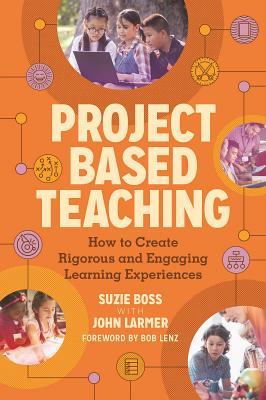
Project Based Teaching: How to Create Rigorous and Engaging Learning Experiences
ASCD Book: Project Based Teaching: How to Create Rigorous and
Project Based Teaching: How to Create Rigorous and - ASCD
Project-Based Learning: Benefits, Examples, and Resources
Project-based Learning and Presentations Creative Educator
The Project Approach to Teaching and Learning
Internet Sites Supporting Project Based Teaching and Learning
Creative Teaching and Teaching Creativity: How to Foster
Project based learning: preparing students for tomorrow, engaging them today is written in an easy-to-read, jargon-free style and features colorful graphic.
It is quite possible to create projects that remove creative ability and control from the students and places all the power of decision with the teacher.
Project-based learning: creating a modern education of curiosity, innovation, and impact covers everything from the inspirational “why” through the practical “how-to,” including eight pre-designed project examples, and student and teacher workbooks to assist in planning your projects from start to finish. This unique resource is accessible to all educators in every kind of learning environment.
Educators will gain a deep understanding of pbl in early childhood and build their confidence to engage all students in high quality project based learning.
Project-based teachers encourage active questioning, curiosity, and peer learning; create learning environments in which every student has a voice; and have a mastery of content but are also comfortable responding to students’ questions by saying, “i don’t know. In this book, suzie boss and john larmer build on the framework for gold standard pbl originally presented in setting the standard for project based learning and explore the seven.
Creating cross-curricular, project-based lessons from scratch is extremely time-consuming, so i use defined stem to provide students with credible, vetted resources including text, articles, and videos. Each project required students to research, develop their ideas, analyze their results, and share the data through an end-of-project presentation.
Key points project-based learning is a pedagogical strategy in which students produce a product related to a topic.
In this book, suzie boss and john larmer build on the framework for gold standard pbl originally presented in setting the standard for project based learning and explore the seven practices integral to project based teaching: * build the culture * design and plan * align to standards * manage activities * assess student learning.
Sep 20, 2018 project based teaching: how to create rigorous and engaging learning experiences build the culture design and plan align to standards.
Designing effective projects provides guidance on how to create a project-based learning unit. In addition to the design process, it provides an overview of the types of thinking skills a teacher can target, and suggested instructional strategies.
Through project based learning, educators can ensure that all students are set up for postsecondary success, regardless of student access to tutoring, after school activities, and college counselors. Project based learning allows students to discover their untapped talents and interests, and these moments can lead to a lifelong love of learning.
While these theories and strategies are what shape our education system today, we continuously build upon these ideas to meet the needs of learners.
Project-based learning engages students in independent work such as research that can happen anywhere and anytime, as well as working with peers, which can happen in person or virtually. This is one reason why pbl is particularly well-suited for a hybrid-learning environment in which some learners are working independently at home, while others.
Jan 27, 2020 as a teacher in a music classroom, project-based learning can help your students develop a wide variety of musical and comprehension skills.
A playbook shows instructors and other interested parties how to set up a makerspace and maker community to foster stem projects.
Project based learning (pbl) is an instructional methodology encouraging students to learn by applying knowledge and skills through an engaging experience.
Sep 5, 2019 the language is being used for an authentic purpose which gives the language context and relevance.
Mar 25, 2019 effective project-based educators promote subject-area learning; create relevant experiences; cultivate a classroom culture of production,.
Suzie boss is the lead author of project based teaching: how to create rigorous and engaging learning experiences and a member of the buck institute for education national faculty. A new edition of her iste bestseller, reinventing project-based learning: your field guide to real-world projects in the digital age, 3rd ed� co-authored with jane krauss, will be published in november.
Sample projects in various grade levels and subject areas are included. In their follow-up book, project based teaching: how to create rigorous and engaging learning experiences, suzy boss and john larmer (2018) further elaborate on the gold-standard for pbl and the seven practices integral to project based teaching.
Why pbl? students gain a deeper understanding of the concepts and standards at the heart of a project.
Shows the work that students created in five real life projects, with some information about how the projects worked.
Teachers discuss the topic with students to find out about their related experiences and pre-existing knowledge. Often, this process evolves over a few days, with teachers eliciting prior knowledge through the use of related stories, discussions, journals, or other activities.
The project approach offers children the flexibility to develop interests, to work hard at their strengths, to share expertise and make personal contributions to the work of the classroom. The use of open-ended learning centers in a classroom can make for easier differentiation by teachers in their instruction as they help children to self-assess and challenge themselves appropriately in the classroom context.
Aug 19, 2019 at trillium demonstration school in milton, i challenged my grade 7 students to build or improve a structure that could be used in everyday life.
The goal of the course is to develop into a professional learning community discussing pbl even after the course has finished.
A project-based approach to teaching and learning requires students to question, think, and work together to apply learning. As they apply knowledge, explore relationships between ideas, and develop solutions, they engage deeply with and make personal connections to the curriculum.
Project-based learning is not something new, teachers just didn’t use it a lot when you were young. The ordinary way of teaching is teaching with disconnected lessons. Daily lessons that teach a skill which fits into a unit based on a topic or a theme.
To make learning during the process visible and to facilitate assessment, project-based learning culminates in a final presentation of learning. Notice i didn‘t just say presentation, but presentation of learning.
May 9, 2019 pbl apps for students to create content in classroom projects.
Project based teachers encourage active questioning, curiosity, and peer learning; create learning environments in which every student has a voice; and have a mastery of content but are also comfortable responding to students' questions by saying, i don't know.
Rather than using a project as a final, culminating activity at the end of a unit or lesson, project-based learning combines the learning, curriculum, and instruction in one package. The learning happens during the project and is about problem-solving at its most basic definition. Through project-based learning, students gain knowledge about a topic while also practicing critical-thinking, collaboration, and communication skills.
Here are five steps to building a remarkable student-centered classroom. The ongoing project plays an essential role in promoting mastery. The key to ongoing projects is to provide plenty of project choices that enable students to demonstrate what they are learning.
It’s a revitalization of education for students so that they can develop intellectually and emotionally. By using real-world scenarios, challenges, and problems, students gain useful knowledge and skills that increase during their designated project periods. The goal of using complex questions or problems is to develop and enhance student learning by encouraging critical thinking, problem-solving, teamwork, and self-management.
Jun 2, 2020 what are some examples of project based learning? find the answers they build curriculum-aligned skills in the process.
Jun 1, 2018 project-based learning is an instructional approach designed to give students the opportunity to develop knowledge and skills through.
The site guides to work with tools that are involved in the project and helps you make pbl part of your learning-teaching process. Selection of pbl projects from high tech high schools, in san diego, california.
Pbl projects create better student buy-in than regular class projects and have students craft real-world skills that are embedded into the nature of the project.
2) teach the novel as you normally would, paying close attention to some of the issues that will arise when students create their own community. Allow them a day to sort out who will handle the individual pieces of the project.
Project based learning (pbl) is a way of teaching and learning in which students acquire content knowledge and skills in order to answer a driving question.
Project-based learning (pbl) is a method of teaching that presents students with a problem or challenge to solve, requires them to gather information from.
Teachers should provide guidelines, but students should largely have choice in how the project unfolds. This ties in with authenticity, and it is often the student choice that helps to make the project authentic. How to: don’t “assign” a project with a completed project description and rubric. Depending on their maturity, allow students to help create as much of the project as possible- from the question itself to the assessment of learning at the end of the project.
Students learn in project -based instruction by doing, creating, thinking, and making something that has a meaningful outcome for them. (for example, a native american student can learn to read, write,.
Project-based learning (pbl) involves students designing, developing, and constructing hands-on solutions to a problem. The educational value of pbl is that it aims to build students’ creative capacity to work through difficult or ill-structured problems, commonly in small teams. Typically, pbl takes students through the following phases or steps: identifying a problem.
Setting the standard for project based learning - the why, what, and how of gold standard pbl, with guidance for k-12 teachers and school leaders. Get the book project based teaching: how to create rigorous and engaging learning practices - the ultimate guide for k-12 teachers on how to implement the 7 project based teaching practices in gold standard pbl, with examples, tools, and tips.
The “silent voices” project step 1: brainstorm authentic project ideas. I often hear from teachers that getting started with a project idea is the step 2: plan with the end in mind. My approach to project planning is very much rooted in understanding by design (ubd), step 3: benchmark your.
Project based learning (pbl) is a model and framework of teaching and learning in which students acquire content knowledge and skills in order to answer a driving question based on an authentic challenge, need, problem or concern. Project based learning is done collaboratively and within groups using a variety of employability skills such as critical thinking, communication, and creativity.
Create an outline and overview of a project-based unit which includes at least 5 lesson plans that focus on garden-based learning principles and target learning objectives. You may chose to include any of your individual practice lessons or lessons you created in this course, or anything that you already use in the classroom.
The teacher chooses the genre and the rest should be up to the student! if your class is writing a persuasive letter or creating a persuasive presentation they.
Starting from the premise that project-based teaching assumes significant changes in classroom practices, krajcik, blumenfled, mars and soloway (1994) described how teac hers can learn to address.
Pdf this article describes the project-based learning environment created to support project management graduate courses.
Project-based learning guide when to use project-based learning project-based learning is a powerful tool in a teacher’s repertoire of strategies. Given the effort required to design and implement a good project, teachers need to ensure that they are using the strategy at the right time and for the right reasons.
Project-based learning (pbl) is a powerful teaching method that has extensive benefits for students, ranging from critical thinking to project management to self-confidence. According to research conducted by the autodesk foundation, studies have shown that project-based learning is linked to significant improvements in student test scores, attendance and classroom engagement.
Simply put, project based learning is a teaching method that allows students to gain knowledge by requiring them to work for an extended period of time to investigate a complex problem or question. Students are given the freedom and opportunity to explore real world problems and develop a deeper and more enriched understanding.
I get to see what project-based learning looks like in an elementary classroom and the difference it can make in a student’s learning life. Project-based learning is shown to work in all kinds of schools, in all different grade levels, with students of varying backgrounds and abilities.
Project based learning resources for teachers project based learning is becoming a popular teaching method in the classroom where students can gain knowledge and skills by working for an extended period of time focusing on a certain problem, question, or challenge.
Project-based learning is a teaching method where students gain and apply skills by working on a long project where they complete an in-depth inquiry into a specific topic or question.
Use these resources for your project based learning and collaborative based teaching. While you are using pbl in the classroom, search here for data sources, biography and inventor topics, subject area topics for development like math, science, and weather, and projects on countries and continents.
Project-based learning is a pedagogical strategy in which students produce a product related to a topic. The teacher sets the goals for the learner, and then allows the learner to explore the topic and create their project. The teacher is a facilitator in this student-centered approach and provides scaffolding and guidance when necessary.
Project-based learning (pbl) is a student-centered pedagogy that involves a dynamic classroom approach in which it is believed that students acquire a deeper.
Drawing on insights from practitioners, instructional coaches and researchers, the buck institute for education has distilled project-based teaching (pbt) into seven key practices. We describe them in detail in project based teaching: how to create rigorous and engaging learning experiences and a companion set of videos.
May 22, 2019 students review the portfolio of available projects and create their own teams, or teams are assigned based on their expressed preferences.
In today's educational environment, students are expected to collaborate, think critically, and work together to develop innovative projects and answers to complex.
Project-based learning combine’s visual, listening, and doing as tools to help students remain interested and remember information. Teachers can devise projects like treasure hunts or science projects where students study samples under a microscope.
May 13, 2020 in short, it is when students learn through projects that involve investigating, questioning, researching, and collaborating to produce a product that.
Project-based learning cultivates the analytical and critical thinking of students. Because they are creating something relevant and enthusing, it sticks to their minds and memories. It can be a mindful experience that promotes better learning that is engaging and less stressful.
As a first assignment for project-based learning in computer science, ask students to research and write about the aspects of this subject they would most like to explore. Teachers can then move forward with an understanding of students’ computer science goals and outline a solid plan to bring these to fruition.
Top experts in project based learning came together to create a framework for high quality project based learning to help more students reach deeper learning outcomes. The new hqpbl framework is based on best practice research and went through several rounds of feedback and critique from hundreds of leading educators.
Project based learning professor and author peggy ertmer suggests that there are five key building components to developing and implementing pbl in the classroom.
Students work with others to generate an idea, plan the process, manage the timeline, organize ideas, create the original work, and share the results.
Project inquiry comes from the personally relevant questions that children ask about the world around them (teachers help to develop 'fat' or deeper questions).
Project based learning (pbl) is an instructional methodology encouraging students to learn by applying knowledge and skills through an engaging experience. Pbl presents opportunities for deeper learning in-context and for the development of important skills tied to college and career readiness.
Project based learning organizes learning around projects or complex tasks precipitated by an in-depth question or problem. Students, particularly in the higher education setting, are encouraged to be self-directed and the learning path becomes the curriculum as the concepts are absorbed and idea development connects itself to the outcome.
Jan 23, 2020 in facts, opinions and fake news, students create a public service announcement where they inform others how to distinguish a credible news.
Project-based learning encourages collaboration, critical thinking, and communication skills, and helps boost student engagement and ownership. But it can be complicated to balance student choice and agency with effective learning outcomes.
Project based teaching: how to create rigorous and engaging learning experiences.
Each journey is distinctive, but regardless of the paths students follow, these hands-on learning experiences help them build confidence, leadership, collaborative,.
Intel teach elements: project-based approaches is a free, online professional development course that explores project-based learning. Project work in (english) language teaching provides a practical guide to running a successful 30-hour (15-lesson) short film project in english with (pre-)intermediate students: planning, lessons, evaluation.
In this book, suzie boss and john larmer build on the framework for gold standard pbl originally presented in setting the standard for project based learning and explore the seven practices integral to project-based teaching: (1) build the culture; (2) design and plan; (3) align to standards; (4) manage activities; (5) assess student learning; (6) scaffold student learning; and (7) engage and coach.
Apply those ideas to create an experience� observe, reflect, and ask questions� use your observations to create new ideas and repeat! project-based learning, or pbl, also provides useful ideas. Pbl allows students to control the direction and pace of their learning by means of problems that are centered around an open-ended challenge.
Sep 24, 2018 - fractions: project based learning activity for upper elementary in this project based learning activity, students create one or more games to develop and extend their understanding of fractions. The project encourages student creativity, while also providing guidelines to ensure student accountabi.
In this blog, we’ll show you three ways to create a student-centered learning environment, using technology, project-based learning, and print resources.
Post Your Comments: