Read Online Malthus & his Ghost: A critique of Paul Erhlich & The Club of Rome - Ray Percival file in ePub
Related searches:
Defeating Thanos and his Malthusian Mission of Population Control
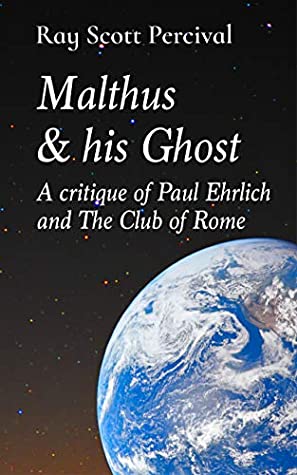
Malthus & his Ghost: A critique of Paul Erhlich & The Club of Rome
By the standards of his or any era, he was a highly educated academic.
According to malthus, eventually these positive checks would result in a malthusian catastrophe (also sometimes called a malthusian crisis), which is a forced return of a population to basic survival.
Thomas malthus is famous (or infamous, depending on your view) for his belief that human population growth would outpace food production—and fast—which would lead to societal ruin.
Mar 27, 2020 malthusian checks the 2020 coronavirus pandemic has all the visible hallmarks of a malthusian pestilence, a necessary positive check visited.
Advertisements: the most well-known theory of population is the malthusian theory. Thomas robert malthus wrote his essay on “principle of population” in 1798 and modified some of his conclusions in the next edition in 1803. The rapidly increasing population of england encouraged by a misguided poor law distressed him very deeply.
Jul 26, 2017 ricardo, malthus, and marx all believed that real wages would remain constant during capitalist development.
As they discuss malthus's assertion that human population would skyrocket if not for natural controls such as famine and disease, charles has a new insight:.
Thomas malthus was a clergyman and philosopher of the late 18th century. His ideas on the causes of poverty and the means by which it could be eliminated were controversial for his time and would probably have been unspeakable in ours.
In 1798, english economist thomas robert malthus wrote an essay predicting that if humans did not check their fast-growing numbers, mass starvation would.
He accumulated figures on births, deaths, age of marriage and childbearing, and economic factors contributing to longevity. His main contribution was to highlight the relationship between food supply and population. Humans do not overpopulate to the point of starvation, he contended, only because people change their behavior.
First published anonymously in 1798, the essay systematically argues that population growth tends to outpace.
Feb 8, 2017 the term malthusian has been applied at times to people who assert that changes in population size, acting through factor prices, influence social.
Sep 11, 2015 malthus postulated that population growth would come to a standstill due to the increased price of supporting a family.
The concept of the malthusian trap was proposed by thomas robert malthus in 1798. The malthusian trap or malthusian theory argues that gains in food production lead to an increase in population, which results in food shortages as the ever growing population takes over land meant more crop production.
Nov 26, 2020 the reverend thomas malthus wrote about the living conditions in his native england “it has appeared that from the inevitable laws of our nature,.
In 1798, thomas malthus proposed his theory in an essay on the principle of population. He argued that society has a natural propensity to increase its population, a propensity that causes population growth to be the best measure of the happiness of a people: the happiness of a country does not depend, absolutely, upon its poverty, or its riches, upon its youth.
In 1798, thomas robert malthus tried to explain this by stating that human population growth was a result of the passionate sexual attraction between men and women and the need for food.
Mar 11, 2019 thomas malthus is a key figure in demography; this article discusses his theories on the effects of population growth.
Thomas malthus, english economist and demographer who is best known for his theory that population growth will always tend to outrun the food supply and that betterment of humankind is impossible without stern limits on reproduction.
Malthus’s argument had a profounder effect on the science of biology, for it was the reading of his essay that sparked the idea of natural selection by survival of the fittest in the minds of both charles darwin and alfred wallace.
Malthus was a political economist who was concerned about, what he saw as, the decline of living conditions in nineteenth century england. He blamed this decline on three elements: the overproduction of young; the inability of resources to keep up with the rising human population; and the irresponsibility of the lower classes.
Malthus was a demographer before he was ever considered an economist. He first came to prominence for his 1798 publication, an essay on the principle of population. In it, he raised the question of how population growth related to the economy.
His father, a personal friend of the philosopher and skeptic david hume, was an ardent disciple of jean-jacques rousseau,.
Thomas malthus (1766 -1834) was a political economist and enlightenment thinker who observed the growing population with increasing concern. To explain poverty, dearth and famine he wrote a famous essay at the end of the 18th century entitled an essay on the principle of population�.
Thomas malthus was an 18th-century british philosopher and economist noted for the malthusian growth model, an exponential formula used to project population growth.
Malthus did not anticipate the development of powerful new vaccines for diseases like small-pox and equally powerful advances in public health infrastructure like modern sewage systems and so forth.
Malthus concluded that “ the power of population is indefinitely greater than the power in the earth to produce subsistence for man”.
Although malthus’ theory, promulgated nearly 220 years ago, thankfully proved wrong with respect to its predicted tragic outcome, the idea of a growing population finding it increasingly difficult to survive from existing resources was certainly close to the truth. It has to be remembered that when malthus theorized about demographic growth.
Thomas robert malthus� born on february 14 or 17, 1766 in surrey, england, thomas malthus was educated at home. His father was a utopian and a friend of the philosopher david hume. In 1784 he attended jesus college and graduated in 1788; in 1791 thomas malthus earned his master's degree.
Thomas robert malthus penned an essay on population growth in 1798 that mathematically demonstrated the relationship between food and human population.
The malthusian theory of population is a theory of exponential population growth and arithmetic food supply growth. Thomas robert malthus, an english cleric, and scholar, published this theory in his 1798 writings, an essay on the principle of population.
Thomas malthus' theory of population proposed that, while the human population grows exponentially, food production grows arithmetically. Hence, at some point humans might face having too few resources to survive. Malthus believed that controlling population growth would help to avoid this catastrophe.
The scottish economist adam smith, who published the wealth of nations in 1776, was a professor of moral philosophy.
Malthus believed two types of population checks could defer such a malthusian catastrophe: preventive and positive. A preventive check is one in which people make the voluntary decision to delay marriage and abstain from mating or procreation, citing the lack of resources for future generations to survive.
When, in 1798, the english scholar thomas malthus published an essay on the principle of population, it would lead to economics being rebranded as “the.
Valentine's day is the anniversary of the birth of thomas robert malthus.
Jul 14, 2019 the econometric evidence for the malthusian trap in pre-industrial europe has been weak.
Sep 14, 2015 thomas malthus was a clergyman and philosopher of the late 18th century. His ideas on the causes of poverty and the means by which it could.
Nov 21, 2020 the malthusian theory of population is a theory of exponential population growth and arithmetic food supply growth.
トマス・ロバート・マルサス(英語: thomas robert malthus [ˈ m æ l θ ə s] 、1766年 2月14日 - 1834年 12月23日)は、イギリスの経済学者。 古典派経済学を代表する経済学者で、過少消費説、有効需要論を唱えた人物として知られる.
Both relied on malthusian population theory to explain the level of real wages.
Post Your Comments: