Read Clostridium Botulinum: Ecology and Control in Foods - Hauschild | PDF
Related searches:
Clostridium Botulinum: Ecology and Control in Foods - Hauschild
Clostridium Botulinum: Ecology and Control in Foods - 1st
Clostridium Botulinum: Ecology and Control in Foods (Food
The ecology and natural history of Clostridium botulinum
Clostridium botulinum: ecology and control in foods.
Observations on the distribution and ecology of Clostridium
Botulism (food-borne botulism and infant botulism)
Clostridium botulinum & Botulism Food Safety and Inspection Service
Clostridium botulinum: Ecology and Control in Foods
Distribution and ecology of Clostridium botulinum in fish and
Clostridium Botulinum: Clinical Features and Identification
(PDF) Clostridium botulinum, A FOODBORNE PATHOGEN AND ITS
Botulism - Diseases and Conditions - Publications - Public
Download book Clostridium Botulinum Ecology and Control in
Persistence and mobility of a Clostridium botulinum spore
The Ecology and Natural History of Clostridium botulinum
Ecology and pathogenicity of the anaerobic pathogen
Guidance Document on Ready-to-Eat Smoked Fish and Multi
Multiplex PCR Assay for Detection and Identification of
Major foodborne pathogens in fish and fish products: a review
Learn and reinforce your understanding of clostridium botulinum (botulism) through video.
Clostridium botulinum is a strictly anaerobic, gram-positive, spore-forming bacterium that produces botulinum neurotoxin, a potent and deadly proteinaceous exotoxin. Clostridium botulinum strain cfsan064329 (62a) produces an a1 serotype/subtype botulinum neurotoxin and is frequently utilized in food challenge and detection studies.
Botulism is diagnosed by detecting botulinum neurotoxin and clostridium botulinum cells in the patient and in suspected food samples. In this study, a multiplex pcr assay for the detection of clostridium botulinum types a, b, e, and f in food and fecal material was developed. The method employs four new primer pairs with equal melting temperatures, each being specific to botulinum neurotoxin.
Clostridium botulinum is a gram-positive, spore-forming, anaerobic bacterium. Almost 80 years before the bacterium itself was first isolated and described by van ermengem in 1897, justinus kerner (1820) tried to identify the most important toxic metabolite of this species: botulinum neurotoxin (bont).
Clostridium botulinum: ecology and control in foods (food science and technology) 1st edition by hauschild (author) isbn-13: 978-0824787486.
Predictive food microbiology has gained favor in recent years as a means of conducting initial microbial safety estimates for food products. Many different approaches for modeling the behavior of the important human pathogen clostridium botulinum have been used, but all of the approaches can be grouped into three basic types: probability, primary-secondary (), and other approaches.
Nov 12, 1992 an in-depth resource addressing the ecology of clostridium botulinum which affects the degree of food contamination, and its control in various.
It can be found in canned food, honey, and baked potatoes wrapped in aluminum foil.
Environmental samples collected along the coastline and from the interior of alaska were examined for the presence of clostridium botulinum. Clostridium botulinum type e was detected in soils from 5 of 12 beaches; in 7 of 115 non-coastal soil samples; in sediments from six of eight locales; in gills of salmon from two fishing areas; and in the feces of 1 of 44 colonic samples from marine mammals.
December 2018; doi clostridium botulinum produces the most poisonous natural toxin known and is a perennial concern to the food industry.
Clostridium botulinum belongs to the genus clostridium and is commonly associated with foodborne botulism. Botulinum is widespread in nature and occurs naturally in soil and aquatic environments. Botulinum is responsible for botulism due to the production of botulinum neurotoxin.
The genetic relatedness of clostridium botulinum type e isolates associated with an outbreak of wildlife botulism was studied using random amplification of polymorphic dna (rapd). Specimens were collected from november 2000 to december 2008 during a large outbreak of botulism affecting birds and fish living in and around lake erie and lake ontario.
Hatheway cl (1993b) clostridium botulinum and other clostridia that produce botulinum neurotoxin. In: hauschild ahw, dodds kl (eds) clostridium botulinum: ecology and control in foods.
Clostridium botulinum produces a neurotoxin which causes the severe, often fatal illness, botulism. As a spore-forming bacterium requiring anaerobic conditions for growth, clostridium botulinum is a potential hazard associated with a wide range of both ambient stable and chilled foods.
Most of us know botulinum toxin in the form of botox injections, used in an extremely diluted form to combat the signs of aging. Botulinum toxin types are all excreted as exotoxins by the clostridium genus.
Clostridium botulinum ecology and control in foods the source of the book this book was brought from archive. Org as under a creative commons license, or the author or publishing house agrees to publish the book.
The bacterium clostridium botulinum is a rod-shaped organism of the genus clostridium. Most commonly found in soil, clostridium botulinum are found to grow most efficiently in low-oxygen conditions.
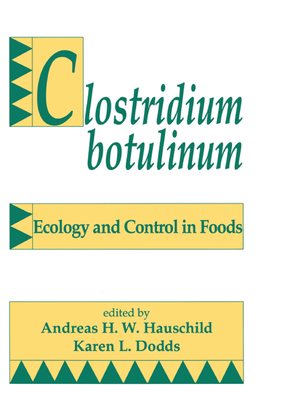
Book description an in-depth resource addressing the ecology of clostridium botulinum which affects the degree of food contamination, and its control in various foods. The text summarizes worldwide data on this organism in food and the environment and the principles of its control in specific foods and products.
Botulinum strain a genome was examined for potential homologues of cnts.
An in-depth resource addressing the ecology of clostridium botulinum which affects the degree of food contamination, and its control in various foods. The text summarizes worldwide data on this organism in food and the environment and the principles of its control in specific foods and products.
Botulism is a rare but serious illness caused by a toxin that attacks the body’s nerves. Symptoms of botulism usually start with weakness of the muscles that control the eyes, face, mouth, and throat.
In: hauschild ahw, dodds kl (eds) clostridium botulinum: ecology and control in foods. Dekker, new york google scholar dowell vrj, mccroskey lm, hatheway cl, lombard gl, hughes jm, merson mh (1977) copro-examination for botulinal toxin and clostridium botulinum.
Botulinum spores in the environment, which may in turn depend on local soil, sediment, and water properties (17–24).
Botulinum in food and the environment environment subject category: miscellaneous.
In order for proliferation to occur, the spores need to be present in non-halophilic salinity and anaerobic conditions.
This document is intended to provide guidance to food safety regulators and food manufacturers to mitigate the potential microbiological risks associated with ready-to-eat smoked fish footnote a and multi-ingredient products containing smoked fish.
Clostridium botulinum is a large gram-positive rod up to 8 μm in length. It is a motile peritrichous bacterium with oval terminal or subterminal spore.
Apr 6, 2018 what is botulism? botulism is a rare but serious paralytic illness caused by a nerve toxin produced by the bacterium clostridium botulinum.
Apr 13, 2020 a boiling water canner is used for canning acid or acidified foods like most fruits, most pickles, jams and jellies.
There are a large number of bacterial toxins that could be used as a biological weapon. They have high mortality rates, are very toxic and are easily produced, as it would be the case of the toxin of clostridium botulinum.
Observations on the distribution and ecology of clostridium botulinum type e in alaska can j microbiol.
Clostridium botulinum toxin is listed as a category a bioterrorism agent on the centers for disease control and prevention website. This is the highest risk category and lists the bacteria and viruses that cause anthrax, botulism, plague, smallpox, hemorrhagic fevers, and tularemia.
Coproexamination for botulinal toxin and clostridium botulinum: a new procedure for laboratory diagnosis of botulism. Observations on the distribution and ecology of clostridium botulinum type e in alaska.
Inactive clostridium botulinum spores are found in soil and water throughout the world.
The distribution of clostridium botulinum in sediments and fish from coastal and inland areas of india was investigated. Seventy-one samples of sediments from brackish water/freshwater farms on the west coast and from the seashores of both west and east coasts were analysed.
Inhibition of growth of clostridium botulinum by intestinal microflora isolated from healthy infants.
Feb 26, 2019 clostridium botulinum is a relatively large, gram-positive, spore-forming rod bacterium that grows best in an anaerobic environment at around.
Traditional food preparation and preservation is a major factor in the production of foodborne botulism (hauschild, 1992).
Feb 20, 2013 avian botulism, a paralytic disease of birds, often occurs on a yearly cycle and is increasingly becoming more common in the great lakes.
Jan 10, 2018 spores produced by the bacteria clostridium botulinum are heat-resistant and exist widely in the environment, and in the absence of oxygen.
Post Your Comments: