Read In the Beginning: The Brain, Early Development and Learning - Michael C. Nagel file in ePub
Related searches:
In the Beginning : the Brain, Early Development and Learning
In the Beginning: The Brain, Early Development and Learning
Session C - The brain, early development and learning
In the beginning: The brain, early development and learning
3 Types of Learning and the Developing Brain How People Learn II
In the Beginning, The brain, early development and learning
The Timing and Quality of Early Experiences Combine to Shape
Music and the Brain From the beginning of recorded history
Can - and should - Learning and the Brain
The Stages of Alcoholism Explained Early, Middle and End-Stage
When You Know You're the Brains in the Relationship
Back to the Beginning Architectural Digest
The Parts of the Brain - Facty Health
Amazon.com: In the Beginning: The Brain, Early Development
Early Brain Development and Health CDC
A HISTORY OF THE BRAIN - Stanford University
In the Beginning: The brain, early - NewSouth Books
'The Brain, early development, and autism' - In Conversation with
Nature, Nurture and Early Brain Development MU Extension
Early brain development research review and update - Child Care
A brief history of the brain New Scientist
Development of the nervous system in humans - Wikipedia
First Seven Years of Childhood: Are They the Most Important?
Child development - In the beginning was the word Science
in the beginning beginning the early humans were - Brainly.in
Building Brains - Save the Children
Emergent Reading and Brain Development IntechOpen
We Must Start Earlier: The Critical Importance of 0-3 U.S. Chamber
The Early Stages of the Brain - BrainFacts.org
Attachment and early brain development–neuroprotective
About the Early Years - Buffett Institute
How Does the Brain Develop? Dana Foundation
Brain Maps: The Study of Brain Function in the Nineteenth Century
Literacy Leadership Brief: Meeting the Challenges of Early
How Early Experience Shapes Human Development: The Case of
Early childhood brain development sets the stage for learning
The Evolution of Humans World Civilization
See Brain. See Brain Read: Reading Instruction Changes the
Fetal development: The 1st trimester - Mayo Clinic
Early Onset Parkinson's: Symptoms, Causes, Risk Factors, and More
Alzheimer’s Prediction May Be Found in Writing Tests - The
Jan 7, 2020 the impact of childhood deprivation on the adult brain and the extent to the structural scan was acquired at the beginning of the first scanning.
As the chemistry of the brain improves, so can the person’s ability to function. This is one reason that someone may make rapid progress in the first few weeks after an injury. Natural plasticity (ability of change) of the brain the brain is a dynamic organ that has a natural ability to adapt and change with time.
In early development (before birth and during the first few months), the brain undergoes more changes in size, shape and structure than at any other time in life. Improved understanding of cerebral development during this critical period is important for mapping normal growth, and for investigating mechanisms of injury associated with risk factors for maldevelopment such as premature birth.
Responding back and forth to your child is a key to developing your child's growing brain.
The basic architecture of the brain is constructed through an ongoing process that begins before birth and continues into adulthood. Simpler neural connections and skills form first, followed by more complex circuits and skills. In the first few years of life, more than 1 million new neural connections form every second.
They then asked the second child to attempt the task in the structured teaching situation. The researchers found that the children who first worked independently.
The story of the brain begins in the ancient oceans, long before the first animals appeared. The single-celled organisms that swam or crawled in them may not have had brains, but they did have.
Music and the brain from the beginning of recorded history, music has been created and enjoyed by people. Thomas jefferson was known to play his violin to help him formulate the most effective word choices as he wrote the declaration of independence.
Nutrition provides the fuel that drives much of this early brain growth and development. Beginning early in pregnancy and throughout early childhood, nutrition.
T he first quarter of the nineteenth century witnessed a growth of interest in the localization of functions in the brain. Undoubtedly, franz joseph gall 's theory of phrenology� was influential in bringing the attention of the scientific establishment to this possibility, despite the fact that his phrenological theory was based on failed inference, not on the scientific method.
The human brain begins forming very early in prenatal life (just three weeks after conception), but in many ways, brain development is a lifelong project. That is because the same events that shape the brain during development are also responsible for storing information—new skills and memories—throughout life.
Nearly 90 percent of brain growth takes place during the first five years of life. That brains, skills, and health are built over time, but starting early is what counts.
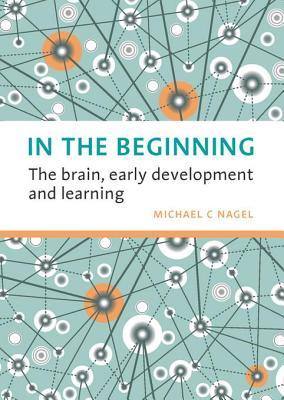
In the beginning explores, synthesizes, and distills current knowledge of early childhood development at the nexus of neuro-scientific discovery. The book's premise - that the brain has a remarkable capacity to change - is underpinned by extensive empirical research.
We already know we should start teaching children before they start school. On april 17 applying new findings on brain development in the earliest years.
Brain development shows a child's increasing ability to understand his or her environment. Young preschoolers start noticing properties of objects (long, short, red, blue, fuzzy) and learn about early intervention for positive.
Evidence that surgical manipulation of the brain could calm patients first emerged in the late 1880s, when swiss physician gottlieb burkhardt, who supervised an insane asylum, removed parts of the brain cortex in patients suffering from auditory hallucinations and other symptoms of mental illness (symptoms later defined medically as schizophrenia). Burkhardt performed his operation on six patients, with the specific purpose not of returning the patients to a state of sanity but of putting.
The brain is divided into three main parts: the forebrain, midbrain and hindbrain. The three parts work together, but they perform independent functions. T the brain is divided into three main parts: the forebrain, midbrain and hindbrain.
Explained how beginning readers who focus on letter–sound re - lationships, or phonics, instead of trying to learn whole words, increase activity in the area of the brain best wired for reading. And the meta-analysis work has detailed the significant effect size of phonics instruction on students’ early reading growth.
Jan 24, 2020 stunting was categorized as early-onset persistent (first stunted at 1–6 socioeconomic factors affect brain development through different.
Young children need safety, love, conversation and a stimulating environment to develop and keep important synapses in the brain.
Jan 22, 2018 whether they end up feathered, scaled, or hairy, all animals start out as a smooth ball of cells known as an embryo.
Jul 30, 2002 brain size in autism at the beginning of this period of life— birth—appears to be normal.
The exceptionally strong influence of early experience on brain architecture makes the early years of life a period of both great opportunity and great vulnerability for brain development. An early, growth-promoting environment, with adequate nutrients, free of toxins, and filled with social interactions with an attentive care-.
The development of the brain begins in the first few weeks after conception. Most of the structural features of the brain appear during the embryonic period (about the first 8 weeks after fertilization); these structures then continue to grow and develop during the fetal period (the remainder of gestation).
The main areas of the brain include the cerebrum, cerebellum, forebrain, and brain stem. The cerebrum is divided into 2 halves that have 4 parts, called lobes.
This session is sponsored by nemours bright start! join us for an engaging session on some “big ideas” about early brain development that every parent and early.
Research shows that the number of loving words a baby hears in the first three years of life makes a big difference.
Larger brain size, also called encephalization, began in early humans with homo habilis and continued through the neanderthal line (capacity of 1,200 – 1,900 cm3). The ability of the human brain to continue to grow after birth meant that social learning and language were possible.
But it took until 1995 for science to show just how early in life the difference begins to matter.
The human brain at stages 21-23, with particular reference to the cerebral cortical plate and to the development of the cerebellum. Embryonic and early fetal development of human taste buds: a transmission electron microscopical study.
Behavior changes may be first signs of alzheimer's on so-called mild cognitive impairment as an early warning sign of can be the first sign of something going wrong in the brain.
Data from harvard university shows the brain develops rapidly during the first years of life. Before children turn 3 years old, they’re already forming 1 million neural connections every minute.
In the beginning: the brain, early development and learning explores, synthesises and distils current knowledge of child development at the nexus of neuro-scientific discovery. The book's premise that the brain has a remarkable capacity to change is underpinned by extensive empirical research.
In france's lubéron region, a childhood memory is made into a home to revisit this article, visit my profile, then view saved stories. By joseph giovannini photography by derry moore view slideshow when, as a boy, daniel vial picnicked with.
In the twenty-first century, early puberty positively correlates with _____.
Live a healthy lifestyle! subscribe to our free newsletters to receive latest health news and alerts to your email inbox.
In the earliest years of life, especially from pregnancy to age three, babies need nutrition, protection and stimulation for healthy brain development.
The “brain” of a personal computer, in which all data flows with commands and instructions, is the central processing unit of the computer. Known as the cpu, this important component of the computer hardware facilitates instructions between.
The images showed that children who became skilled readers by the end of first grade had, as early as kindergarten, effective brain-activation patterns for reading. Children who had a bumpier start with reading skills showed different patterns.
The early or adaptive stage of alcoholism marks the beginning of an alcoholic’s struggle with addiction. At this point, drinking is no longer just a casual social activity — it’s become a daily habit that may be used to cope with stress, anxiety or other emotional problems.
Just four weeks after conception, the neural tube along your baby's back is closing. The baby's brain and spinal cord will develop from the neural tube. The heart and other organs also are starting to form and the heart begins to beat. Structures necessary to the formation of the eyes and ears develop.
Changes in the brain related to alzheimer's begin years before any signs of the disease. This time period, which can last for years, is referred to as preclinical alzheimer's disease. The stages below provide an overall idea of how abilities change once symptoms appear and should only be used as a general guide.
He provides a possible mechanism by which this may occur in the brain, in which experience “instructs” neural circuits to process information.
Oct 15, 2015 cleveland, ohio -- it's hard to believe, but newborn babies -- squalling, red- faced and utterly helpless -- actually arrive in the world with.
Apr 29, 2003 in the introduction to this article, the point is made about the isolation of the brain, except through the sensory nervous system.
The incredibly complex structure has multiple parts that work both with each other and with information received from the rest of the body.
The study of anatomy begins at least as early as 1600 bc, the date of the edwin smith surgical papyrus. This treatise shows that the heart, its vessels, liver, spleen, kidneys, hypothalamus, uterus and bladder were recognized, and that the blood vessels were known to emanate from the heart.
May 30, 2019 however, most of our investments in early childhood start too late, at ages 4 and older.
In the earliest years of life, especially from pregnancy to age three, babies need nutrition, protection and stimulation for healthy brain development. Recent advances in neuroscience provide new evidence about a baby’s brain development during this time.
In the beginning: the brain, early development and learning explores, synthesises and distils current knowledge of child development at the cutting edge of neuroscientific research. With exceptional clarity, the author draws on empirical evidence to explain the brain’s remarkable capacity to change. From pre-conception to birth, and throughout the preschool and early school years, the importance of the environment and, most crucially, the presence of nurturing relationships will powerfully.
Alexandrian anatomists such as rufus of ephesus had provided a general physical description of the brain. Basic structures such as the pia mater and dura mater (the soft and hard layers encasing the brain) were identified in addition to the basic divisions of the brain itself. Building upon this research in the next century, the roman physician galen concluded that mental actively occurred in the brain rather than the heart, as aristotle had suggested.
Learn more about this study and how speech patterns may be a window into brain health. What speech changes mean for brain health a new study from the university of wisconsin-madison has found that using pauses and filler words may be an early indicator of cognitive decline.
Post Your Comments: