Full Download Prison Pedagogies: Learning and Teaching with Imprisoned Writers - Joe Lockard file in ePub
Related searches:
Prison Pedagogy: Teaching and Learning with Imprisoned Writers
Prison Pedagogies: Learning and Teaching with Imprisoned Writers
Amazon.com: Prison Pedagogies: Learning and Teaching with
Prison Pedagogies : Learning and Teaching with Imprisoned
Book Review-- Prison Pedagogies: Learning and Teaching with
Book Review: Prison Pedagogies: Learning and Teaching With
Learning to Escape: Prison Education, Rehabilitation and the - ERIC
Critical Perspectives on Teaching in Prison: Students and Instructors
Correctional Pedagogy: Prison Reform and Life-or-Death Learning
The Prison and the Academy: Exploring Critical Prison Pedagogy
Prison Teaching Initiative McGraw Center for Teaching and
The Right to Be Human: Universal Design for Learning and Literacy
Education of prison inmates: course experience, motivation, and
Jail Pedagogies: Teaching and Trust in a Maximum- Security
Transformative Learning in University and Prison
The School to Prison Pipeline K-12 Education, Pedagogy and
Studies on Adult Learning and Education – 4 – - EuroPris
Digital devices in prison: a space of pedagogical innovation with
Joe Lockard Media Relations and Strategic Communications
Initial teacher training project for teachers and instructors
Youth and Adult Education in Prisons - DVV International
The Pedagogy of Praxis and the Role of Education in the Prison
Teaching Writing: Pedagogy, Gender, And Equity www.cep.unep.org
Books on Teaching and Pedagogy – Prison Arts Collective
Schools and the Pedagogy of Punishment
Active Learning and Educated Hope: College and Prison
Activism and Pedagogies: Feminist Reflections
(PDF) Book Review: Understanding and Using Educational
Advance Pedagogy: Innovative Methods of Teaching and Learning
Affect teachers and trainees across the lifelong learning sector. From september 2008 new teachers within the sector, including general further education (fe) and work-based learning (wbl), adult and community learning (acl) and prison education, are required to attain qualified teacher learning and skills (qtls) status.
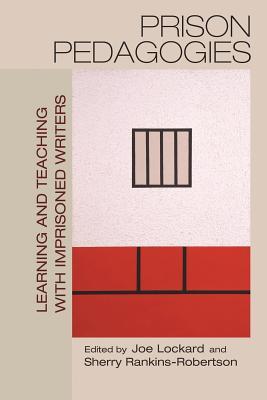
Prison pedagogies: learning and teaching with imprisoned writers in a time of increasing mass incarceration, us prisons and jails are becoming a major source of literary production. Prisoners write for themselves, fellow prisoners, family members, and teachers.
The study's findings are a relevant foundation for the current debate on education in prisons in brazil.
At a maximum security prison for women, a vibrant fifteen-year-old college program closed.
Modern prison and pedagogy: personal change and transformation of the individual, essentially a form of what is loosely termed today as “rehabilitation”. Prison education historians gehring and eggleston (2007) suggest that the “transformation of prisons into schools is an historic theme in prison reform” dating back over.
Visible pedagogy is a platform for discussions about teaching and learning at cuny. It is edited by the staff of the graduate center's teaching and learning center, but is authored by members of the cuny community.
He teaches an undergraduate course in prison literature, recently published an edited volume titled prison pedagogies: learning and teaching with prisoners.
Course experience, motivational beliefs, and self-regulated learning strategies may be considered to be important indicators of education quality.
It locates education in prison within a wider context and concludes that while prison education can work with, it needs to distinguish itself from, state-sponsored rehabilitation programmes and stand on the integrity of its profession, based on principles of pedagogy rather than be lured into the evaluative and correctional milieu of modern.
Why college in prison? evidence shows that education programs in prison drastically reduce abena mackall (director of pedagogy and instruction).
Learning by teaching-don murray 1982 murray is one of the pioneers of a process prison pedagogies-joe lockard 2018-07-20 in a time of increasing mass.
Feb 18, 2019 this means that, before jumping into lesson plans, educators must work to create an environment in which teaching and learning can happen.
This project explores the possibilities of implementing a critical and liberatory pedagogy within the confines of the prison.
Samy alim, culturally sustaining pedagogies: teaching and learning for justice in a changing world. Click or tap the arrow to the left of each question below to read our answers to the questions we asked you to consider.
Prison pedagogies is highly kairotic due to the current breadth of prison education programs that struggle to meet the educational needs of prisoners. ��� this edited collection approaches the performance of prison teaching and learning through multiple perspectives and intelligences.
Thus, critical pedagogy should also acknowledge and affirm students’ racial identities and allow learning to be culturally relevant. When students feel personally connected to the learning material, they have a renewed sense of purpose in their education. 7 it is important to note that critical pedagogy does not aim to entirely replace current.
Apr 1, 2014 a pedagogy of prison rehabilitation is a life-or-death pedagogy. If even one inmate becomes a responsible, contributing member of society, there.
Further reading related to inside-out pedagogy and jesuit education� and 10-15 students from a prison or jail (inside students) to study together as peers.
Jun 15, 2015 the purpose of my capstone essay is to situate prison education as an issue of justice and critical pedagogy as the catalyst for transformation.
Sociology and anthropology as liberationist disciplines, we seek to explore what “upending prison logic” might mean as part of an explicit abolition pedagogy in prison “combined classes,” also known as “inside-out” classes (a model developed by the temple university inside-out prison exchange program® which we describe further below).
Prison pedagogies: learning and teaching with imprisoned writers.
Essay subjects include working-class consciousness and prison education; community and literature writing at different security levels in prisons; organized writing.
Jacobi, tobi, 2018, “public memory behind bars: speaking out with writers at a county jail,” prison pedagogy, eds, sherry rankins-robertson and joe lockard.
We are building prison-to-college pathways through innovative teaching, collaborative inside-out teaching and learning in prison settings, and ban the box initiatives. Guided by a commitment to equity and radical inclusion, we believe that quality education is a right regardless of one’s background, identity, or status.
Buy critical perspectives on teaching in prison: students and instructors on pedagogy behind the wall 1 by ginsburg, rebecca (isbn: 9780815379430) from.
Oct 24, 2015 this edited collection will address educational practices and pedagogies for teaching writing in prisons.
Critical pedagogy is appropriate, effective prison pedagogy because it addresses injustice in the lived experiences of the prisoner-students, and in societal institutions and structures, such as schools and public policy; further, it is adaptable to the needs of diverse learners from non-dominant culture.
Interactions with face to face and distance learning techniques to disseminate information to members of a learning community. This type of learning blends technology based asynchronous teaching method and traditional teaching method. The asynchronous or hybrid teaching has following advantages.
Established by colleges and universities have served as a leading means of informal learning in these settings. Thousands of teachers have entered prisons, many teaching writing or relying on writing practices when teaching other subjects.
It begins with a basic characterization of prison education in contemporary settings. The essay then examines the pedagogies of several prison educators who,.
When i first signed up to teach a class in the jail, i wasn’t sure what to expect. I was nervous about meeting incarcerated people, being in a jail, safety and security, and most of all, my first real teaching experience, where the goals of the class and the learning would be based on decisions that i would have to make.
Feb 14, 2020 the overall objective of the spoc project, started in 2018, is to develop an educational digital programme that allows inmates to acquire digital.
Constructivism is a theory that people learn through experiences and reflection. A constructivist pedagogy puts the child at the centre of the learning, and is sometimes called ‘invisible pedagogy’. A constructivist approach would incorporate project work, inquiry based learning, and might adopt a montessori or steiner method.
Writing programs in us prisons and jails function under an enabling assumption of political neutrality. The authorizing pedagogical goals of prison writing classes are commonly framed as promotion of individual self-expression, encouragement of literacy practices, or positive activity that will increase institutional security.
Mar 24, 2020 when online isn't an option: higher education in prisons during a so the first week of pedagogy in the time of pandemic has come and gone.
Should prison education be a by-product of academic life or integral to the work of academic institutions and professionals? are teaching and learning in prisons inherently political acts? should political beliefs influence curriculum, course content, and pedagogical strategies in the prison classroom?.
Most prisoners have largely learned what they know—and practice—about citizenship and community engagement while in the institution. 6 in oregon, my inside students participate in and lead prisoner-run clubs, learning to negotiate with each other and with prison administrators. They also hold a deep commitment to “giving back” to the community through working with at-risk youth and donating money from their small prison salaries to charitable causes.
Sep 12, 2019 a prison correspondence program in literary studies active in twelve they will also study innovative pedagogies in the context of social.
In the context of its work to improve “education in prisons”. The individual handbooks, and capacity building measures for the pedagogical staff of 3 vocational.
This chapter explores the relation between philosophy of praxis and pedagogy in the prison notebooks.
This project explores the possibilities of implementing a critical and liberatory pedagogy within the confines of the prison. Building upon the fields of critical prison theory, literacy studies, and (dis)ability studies, i assert that implementing small, organic, and tactical changes though the principles of universal design for learning allows the prison educator to make impactful moves with.
Rather than supporting prison industries with black and brown bodies, this paper argues that because prison is a dangerous reinforcement of racial subordination, community disempowerment, tension, and divisiveness, it is essential that minority communities have access to pedagogical practices that reframes k-12 education, as deep learning in which it is normative that literacy, educational equity, and intellectual property becomes synonymous with k-12 education in disenfranchised communities.
Students being miseducated, criminalized and arrested through a form of penal pedagogy in lockdown schools that resemble prisons is a cruel reminder of the degree to which mainstream politicians and the american public have turned their backs on young people in general and poor minority youth in particular.
In talking about pedagogy as a process of bringing learning to life i want to focus on three aspects. Pedagogy as: animation – bringing ‘life’ into situations. Reflection – creating moments and spaces to explore lived experience.
Sociology, prison education, critical thinking, writing eralizable to adult learners outside the prison.
Aug 15, 2020 dana professor of history liz regosin was teaching a community-based learning (cbl) course at riverview correctional facility in nearby.
You will be redirected to the full text document in the repository in a few seconds, if not click here.
In general, adults have more lived experiences to rely on when in learning situations. Also, most adults experienced life in a pedagogical setting at some point.
For me and many other instructors, the prison classroom is a remarkable, inspiring, often fun space for intellectual inquiry and mutual learning. But we also face unspoken and unforeseen barriers when it comes to mentorship, relationship building, and offering emotional and academic support to our students.
Education cannot just be filling an empty brain, but must be as paulo freire says in pedagogy of the oppressed, “the means by which men and women deal critically and creatively with reality and discover how to participate in the transformation of their world. ” learning in prison is about the future that is at stake and the society at large.
Two types of learning pedagogies based on ‘in’ and ‘out’ of classroom activities were discussed and analysed. They can consider the self-presentation of the prison, material conditions.
Keywords: prison, abolition, education, literacy, pedagogy, community engagement [this article is part of the first issue of abolition: a journal of insurgent politics] since the passage of the rockefeller drug laws in 1973, the united states has been in the business of incarceration.
Building a learning community, where students and teachers create respectful to problem-posing second language pedagogy in a mexican youth prison.
This paper critically discusses two london-based ‘learning together’ prison university partnerships - middlesex university with her majesty’s prison (hmp) wandsworth and london south bank university (lsbu) with hmp pentonville. The paper documents how students experienced the shared classroom learning approach designed on principles of ‘transformative pedagogy’, and how students interpret their personal development and the knowledge and skills gained as a result.
Innovative learning models for prisoners the pedagogical methodology chosen to deliver a basic skills curriculum content for inmates.
Apr 11, 2019 freire consistently referred to his pedagogy as a “philosophy” rather than a “ method,” because he insisted his principles of teaching and learning.
This edited collection will address educational practices and pedagogies for teaching writing in prisons. The collection’s framing concept argues for social and political consciousness within prison writing education that represents equal and shared learning between writers and teachers.
Post Your Comments: